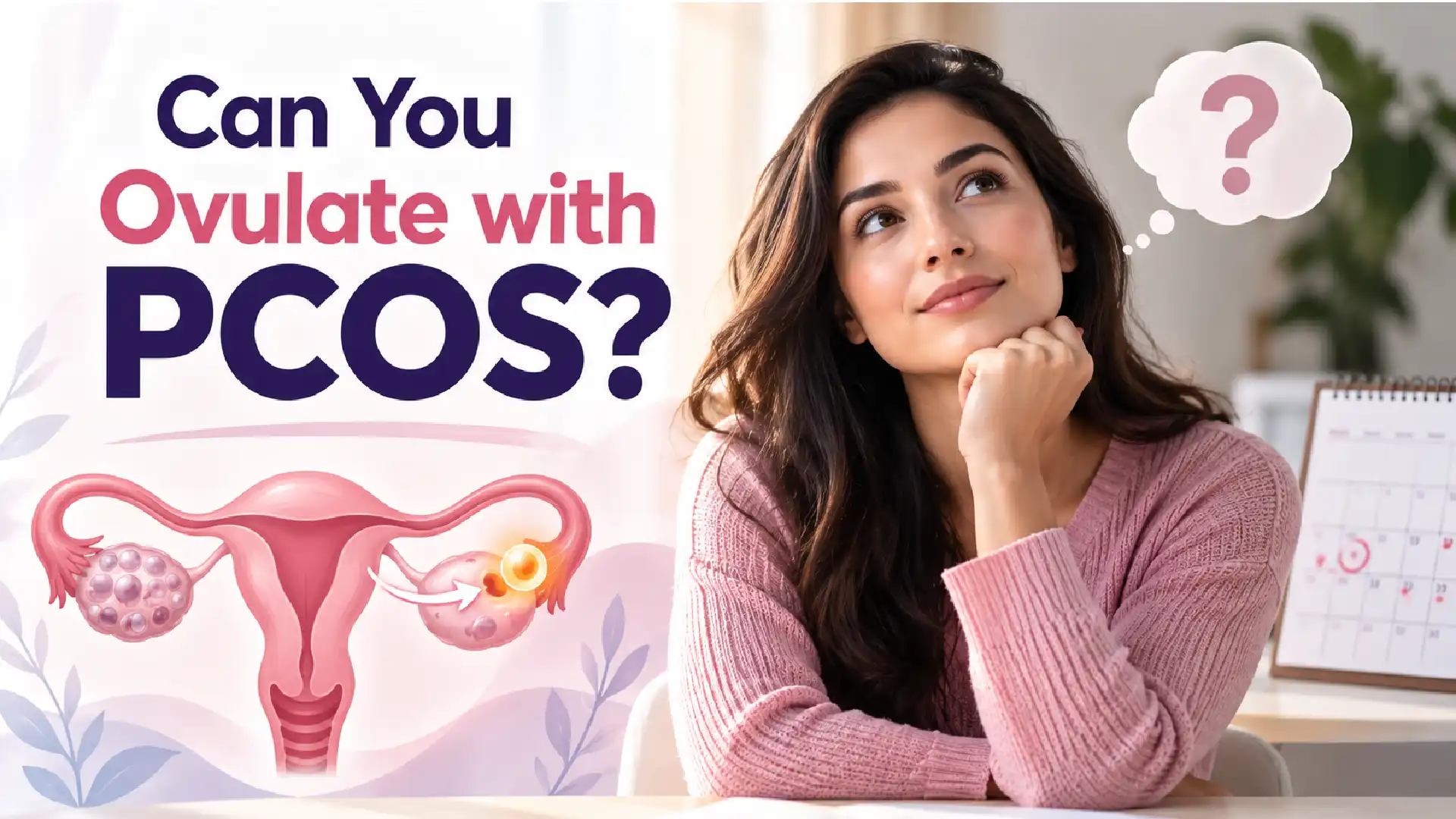
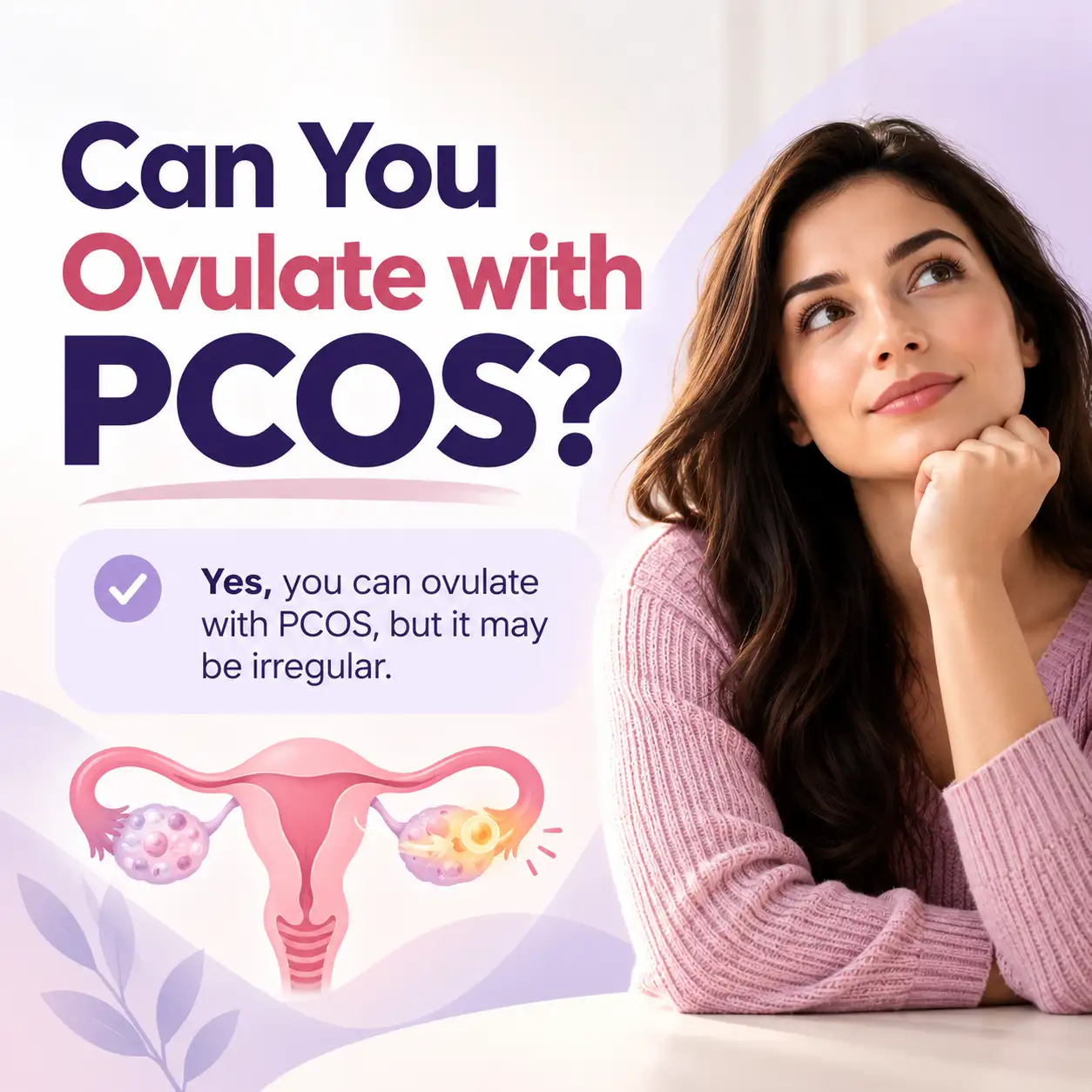
Yes, you can ovulate with polycystic ovary syndrome (PCOS). Having PCOS does not mean your ovaries never release an egg. However, hormonal changes associated with the condition can make ovulation irregular or prevent it from happening in some cycles. This can make it harder to predict your fertile window and conceive naturally.
How Does PCOS Affect Ovulation?
Ovulation happens when an ovary releases a mature egg. In a typical menstrual cycle, this usually happens once per cycle. With PCOS, hormonal imbalances, including elevated androgen levels and insulin resistance in some people, can interfere with normal follicle development.
As a result, you may ovulate later than expected, ovulate only occasionally, or experience cycles in which no egg is released. Some people with PCOS have relatively regular periods and ovulate, while others have long gaps between periods or no periods at all.
A review published in 2022 describes several approaches to managing PCOS-related anovulation, including lifestyle interventions and medical treatments to induce ovulation.
How Can You Tell If You’re Ovulating with PCOS?
Tracking ovulation can be more challenging when your periods are irregular. A few signs and methods may help:
Cervical mucus: Clear, slippery, stretchy discharge can indicate that ovulation may be approaching.
Basal body temperature: A small, sustained temperature rise can help identify a pattern after ovulation has occurred.
Ovulation predictor kits: These tests detect luteinizing hormone (LH), which rises before ovulation. Some people with PCOS have elevated baseline LH, which can make results harder to interpret.
Medical testing: A clinician may use progesterone blood testing, ultrasound monitoring, or other assessments to determine whether ovulation is occurring.
No single symptom or home test can confirm ovulation reliably in every person with PCOS. If you need a clearer answer, a healthcare professional can recommend an appropriate assessment.
Can You Improve Ovulation with PCOS?
In some people, lifestyle changes that support overall metabolic health may help improve menstrual regularity. A balanced diet, regular physical activity, and appropriate management of insulin resistance can be useful. Weight loss may help some people who are overweight, but it is not necessary or appropriate for everyone with PCOS.
If you are not ovulating regularly and want to become pregnant, medical treatment may help. The 2023 international evidence-based guideline recommends letrozole as the first-line medication for ovulation induction in people with PCOS-related anovulatory infertility when no other infertility factors are present. Other options may be considered depending on your medical history and response to treatment. These medicines require guidance from a qualified clinician.
When Should You See a Fertility Specialist?
Speak with a healthcare professional if your periods are very irregular, you go several months without a period, or you are trying to conceive without success. You do not necessarily need to wait a full year before seeking advice if you already have PCOS and suspect you are not ovulating regularly.
The bottom line: You can ovulate with PCOS, and natural pregnancy is possible. The key is understanding whether and when ovulation occurs and getting medical support if irregular or absent ovulation is affecting your fertility.