


Related articles
Read more

Surrogacy is when a surrogate mother carries and delivers a baby for a couple or individual who cannot conceive naturally.
In Islam, these distinctions matter because lineage and marriage rules must be preserved. Religious rulings depend on genetics, marital bonds, and ethical practices.
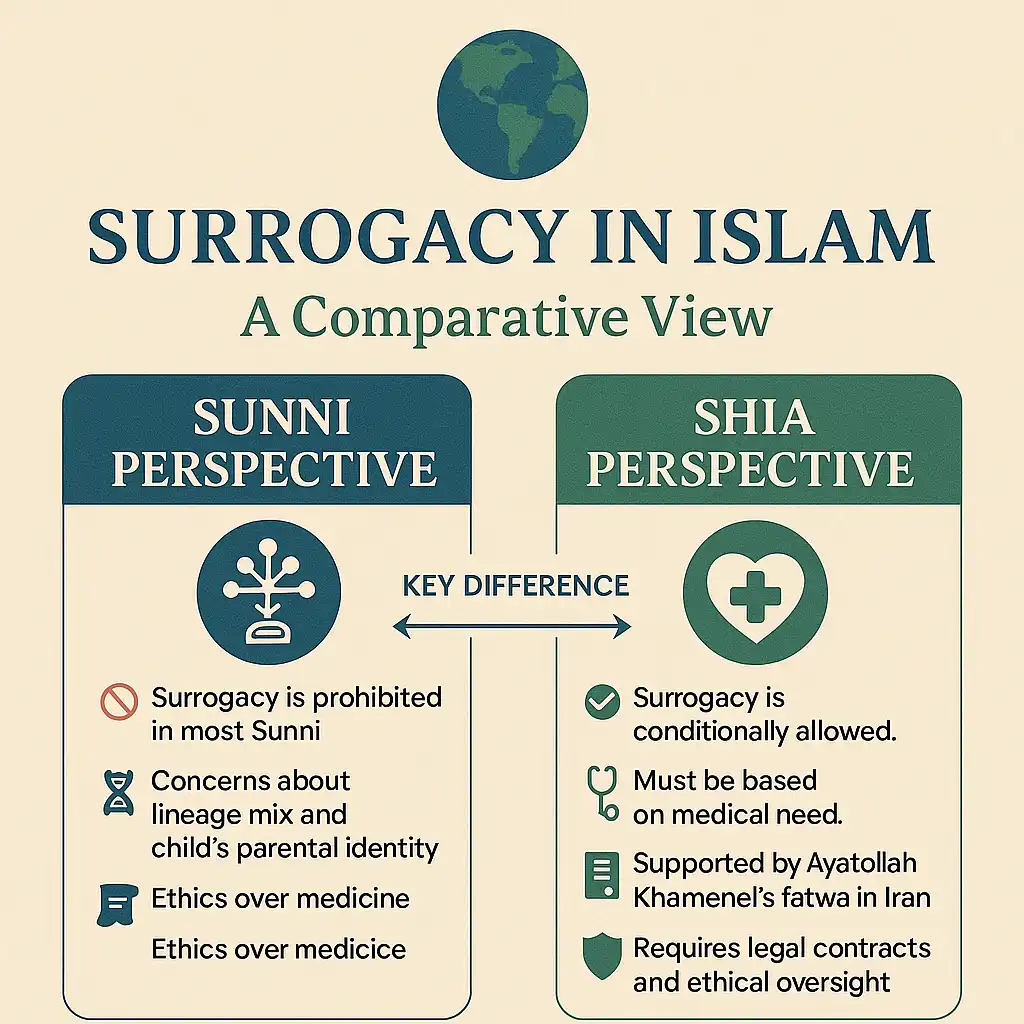
In Sunni Islam, surrogacy is generally considered haram, meaning it is not allowed. Sunni scholars believe that pregnancy and childbirth must stay fully inside the marriage, with no involvement from any outside person. In this view, using another woman’s womb, even if the sperm and egg belong to the married couple, creates confusion about motherhood, inheritance, and family lineage. Because Islamic law gives great importance to clear family ties, most Sunni scholars say that surrogacy brings problems that cannot be accepted in religion.
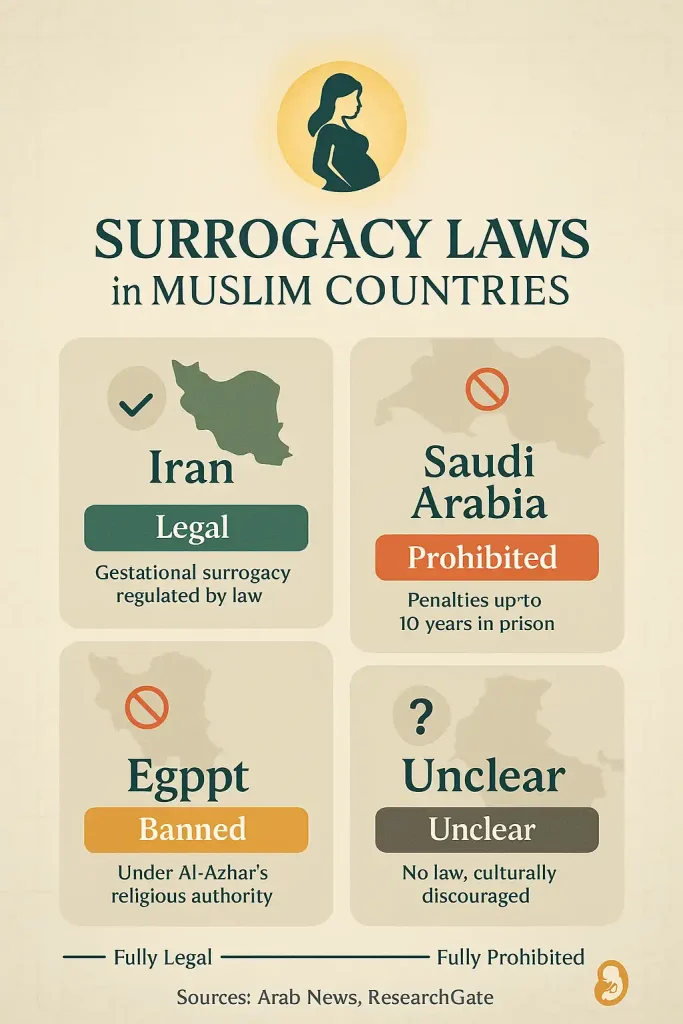
Across many Sunni-majority countries—such as Indonesia, Malaysia, Pakistan, and Turkey—this belief has shaped national laws. In these countries, surrogacy is either fully banned by law, forbidden by religious councils, or considered morally unacceptable. Their main concern is that a child carried by someone outside the marriage may lead to emotional and legal conflicts. They argue that motherhood in Islam is not only biological, but also connected to pregnancy, birth, and the rights that come with it.
At the same time, Sunni scholars do support infertility treatment in general. Islam encourages couples to seek medical solutions when facing infertility, and treatments like IVF are allowed as long as they involve only the husband and wife. Because of this, some traditional scholars have said that surrogacy could only be acceptable if the embryo were placed in the womb of a second wife, meaning the pregnancy still stays within the marriage structure. But modern Sunni fatwas mostly reject even this option, explaining that it still creates issues about parental rights and the role of each wife in the child’s identity.
Overall, while infertility is deeply understood and compassionately addressed in Islam, Sunni Islamic law prioritizes protecting family lineage and minimizing ethical conflicts. For this reason, surrogacy—especially any form involving a third-party womb—is widely viewed as religiously prohibited in Sunni communities today.
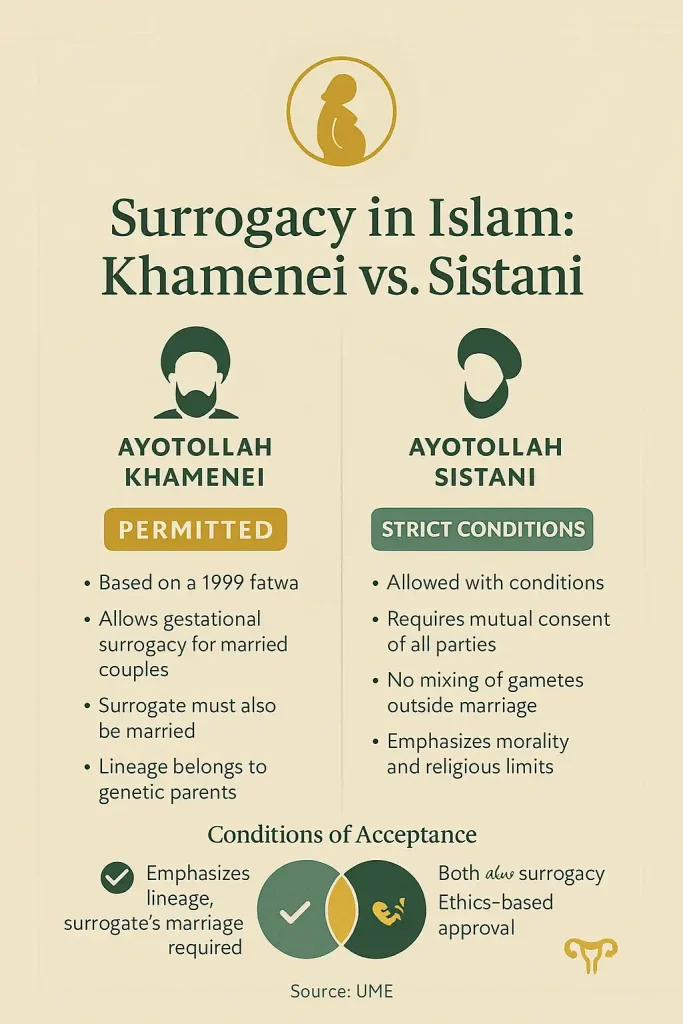
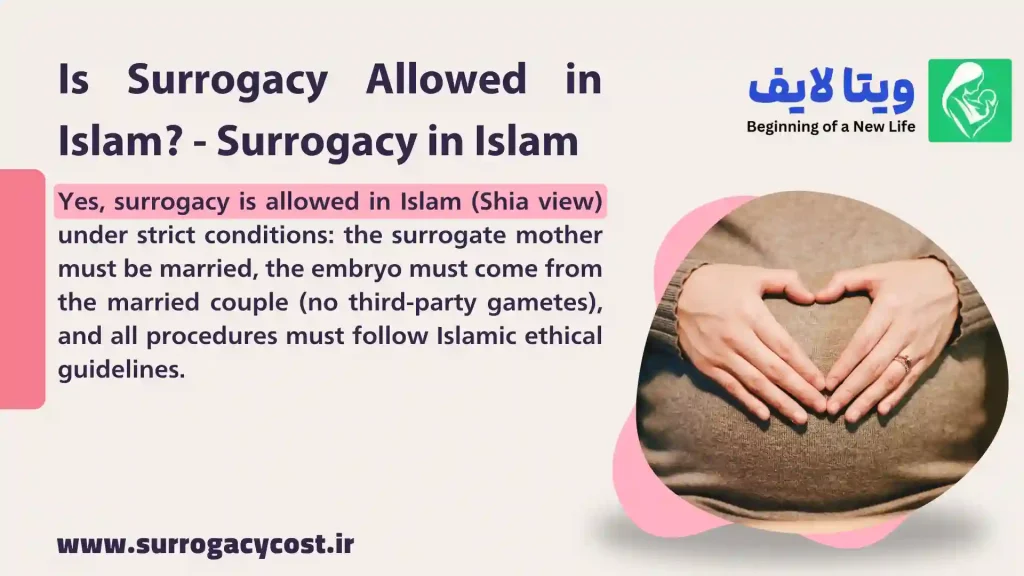
Shia scholars generally hold a more flexible and supportive view toward surrogacy compared to Sunni interpretations. Their rulings are based on ijtihad and the principle of asalat al-ibaha—that something is permissible unless proven otherwise. Because infertility is considered a medical hardship, many Shia jurists allow gestational surrogacy when the process preserves clear lineage and follows Islamic ethics.
Ayatollah Khomeini and Ayatollah Khamenei have both permitted surrogacy under specific conditions, stating that the child’s lineage belongs to the genetic parents. Scholars such as Sayyed Mohammad Al-Musawi explain that a temporary or permanent marriage contract between the surrogate and the genetic father during embryo transfer is required to keep the process within Islamic boundaries. Ayatollah Sistani also allows surrogacy but with stricter conditions and full consent from all parties.
This approach is reflected in Iran’s legal system, where surrogacy is regulated and widely practiced under the 2003 Embryo Donation Act. As a result, surrogacy in Iran has become a trusted, ethical, and fully supervised option for couples seeking a religiously approved pathway to parenthood.
| Aspect | Sunni View | Shia View |
|---|---|---|
| Ruling | Generally haram (prohibited) | Permissible under specific conditions |
| Lineage Concern | High (prohibits third-party involvement) | Managed via gestational surrogacy |
| Scholarly Basis | Ibn Baz, Al-Azhar, Council of Islamic Fiqh | Ayatollah Khamenei, Ayatollah Sistani |
| Legal Status | Banned in most Sunni-majority countries (e.g., Saudi Arabia, Egypt) | Legal framework exists in Iran since 2003 |
This comparison is based on authoritative Islamic jurisprudence sources and scholarly opinions from both Sunni and Shia traditions. For more detailed information, consult reputable Islamic academic resources.
The permissibility of surrogacy in Islam hinges on sectarian interpretations:
For Muslims living in countries where surrogacy is restricted, surrogacy in other countries can offer a legal and safe alternative, allowing them to pursue parenthood while respecting their religious and legal considerations. Consulting a knowledgeable scholar from their sect and understanding local laws is crucial. This article provides a detailed, evidence-based resource to navigate the complexities of surrogacy in Islam, grounded in scripture, hadiths, and scholarly consensus.