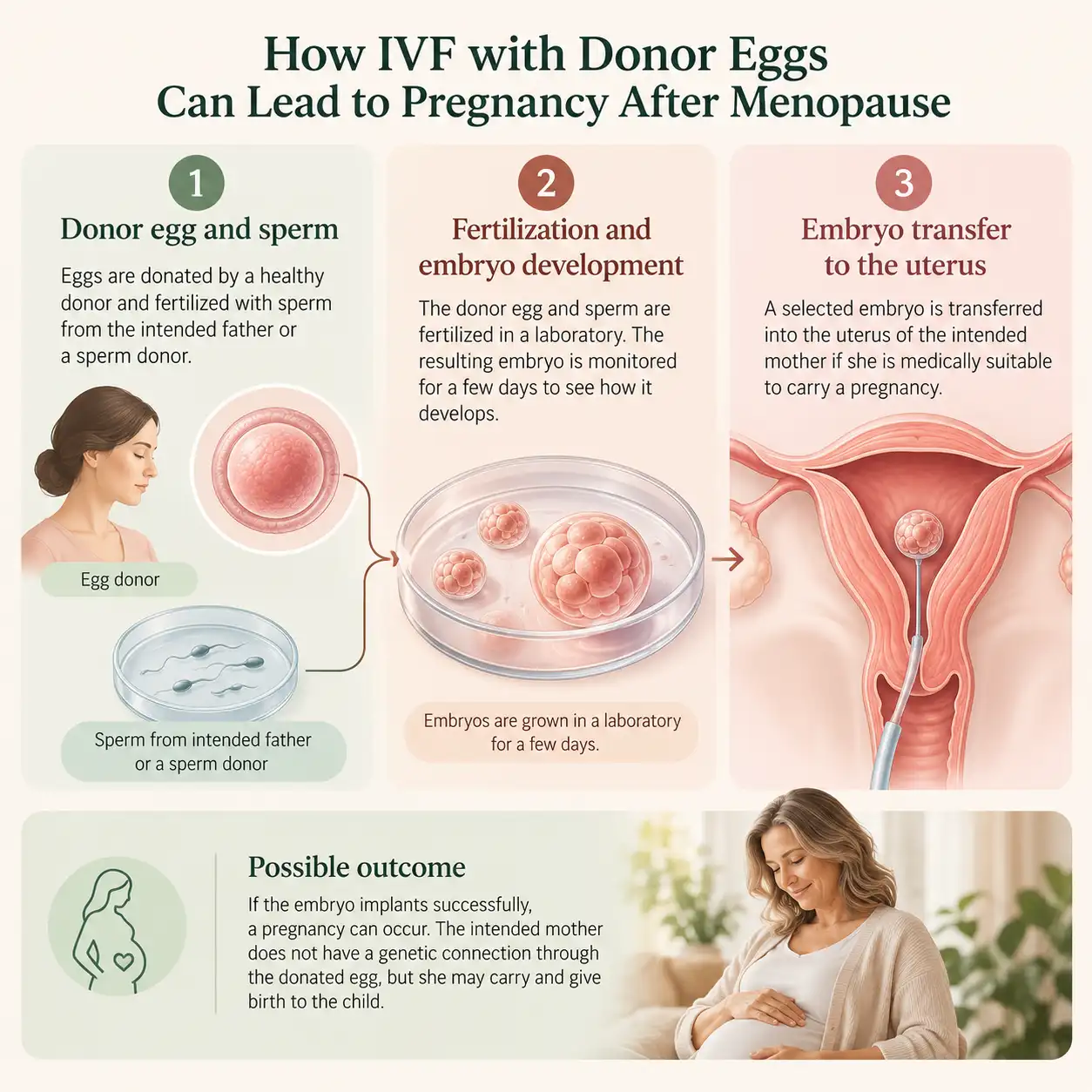
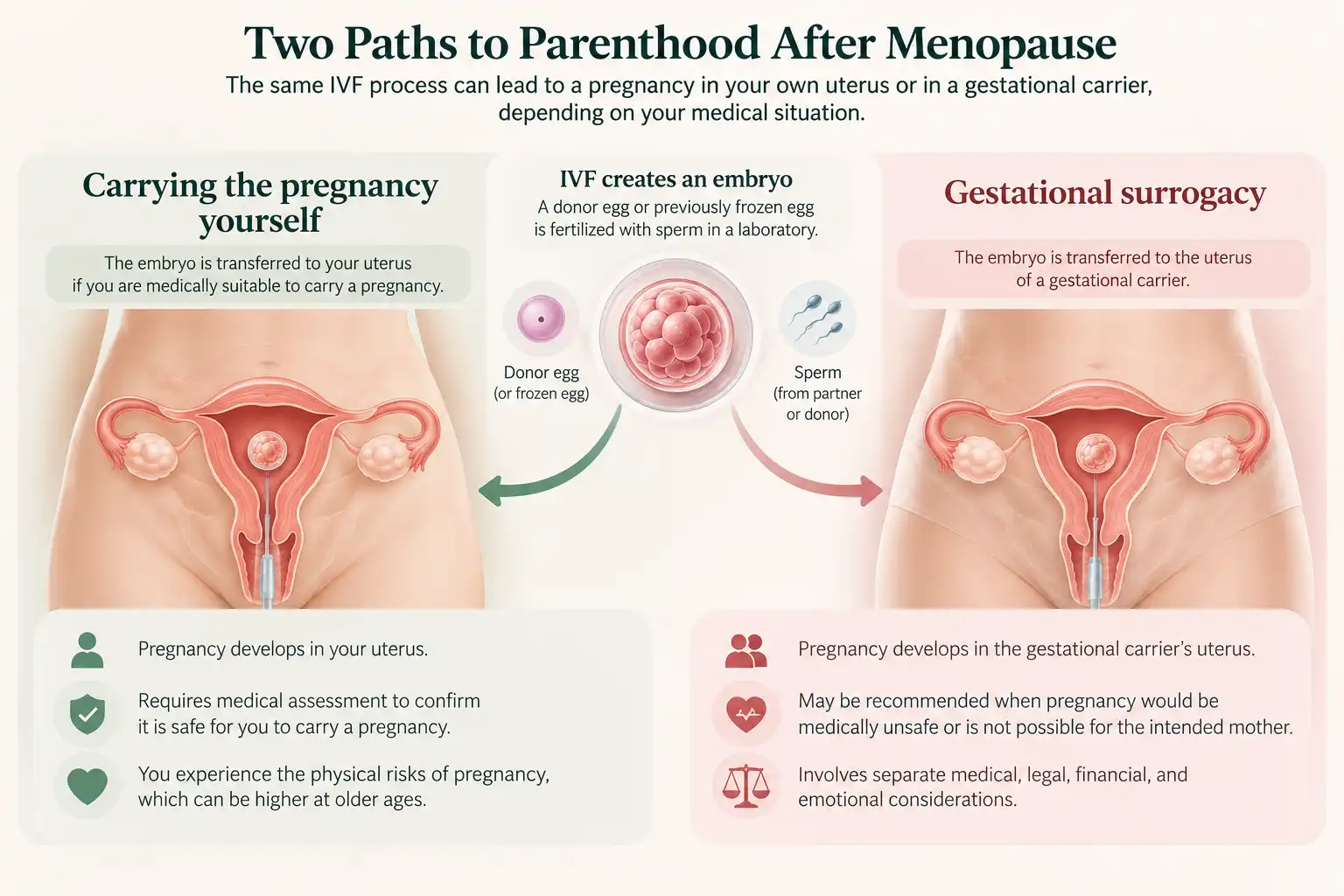
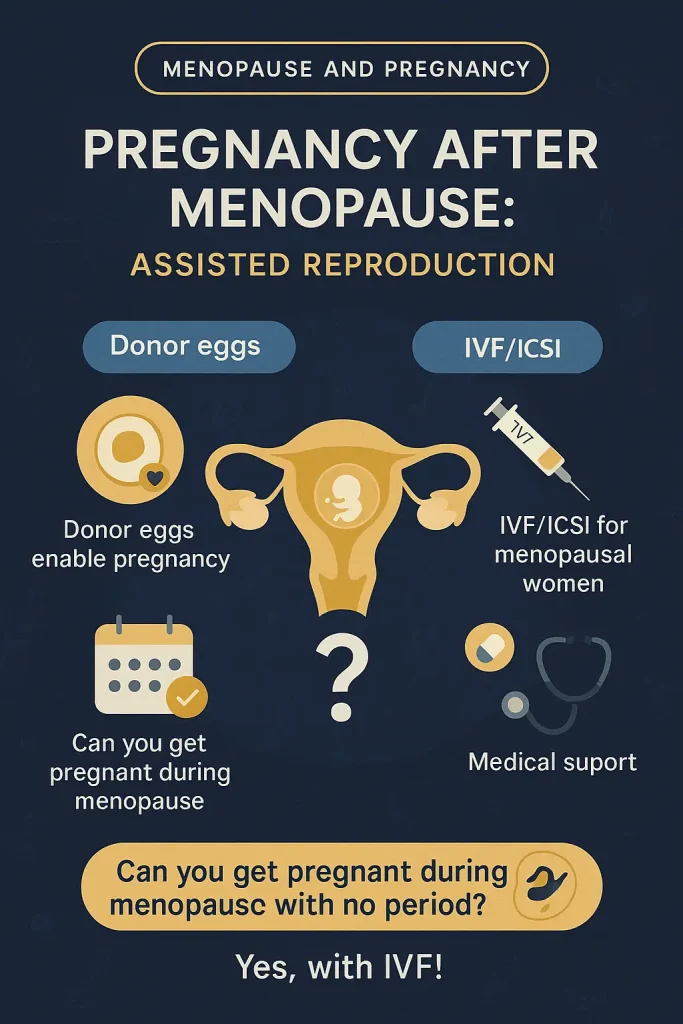
Donor eggs can make pregnancy possible after age 50, but success is not guaranteed. The age and health of the person carrying the pregnancy also matter.
A study published in JAMA in 2002 examined 77 selected postmenopausal women aged 50–63 who underwent IVF using donor eggs. The researchers reported a clinical pregnancy rate of 45.5% and a live birth rate of 37.2% per embryo transfer.
The study also reported pregnancy complications, including preeclampsia and gestational diabetes.
These findings are historical and come from a small, selected group. They should not be treated as current success rates or as a prediction of an individual’s chances.
Research also suggests that the recipient’s age may affect outcomes even when donor eggs are used.
A 2026 study examined 2,760 single-blastocyst transfers in 1,774 women receiving donor eggs. Among recipients aged 49 and older, the live birth rate per transfer was 31.7%, compared with 46.2% among recipients aged 35–40. The miscarriage rate was 37.6% in the older group and 24.2% in the younger group.
This was an observational study. It cannot prove that uterine ageing alone caused the differences, and the results do not predict what will happen to every patient.
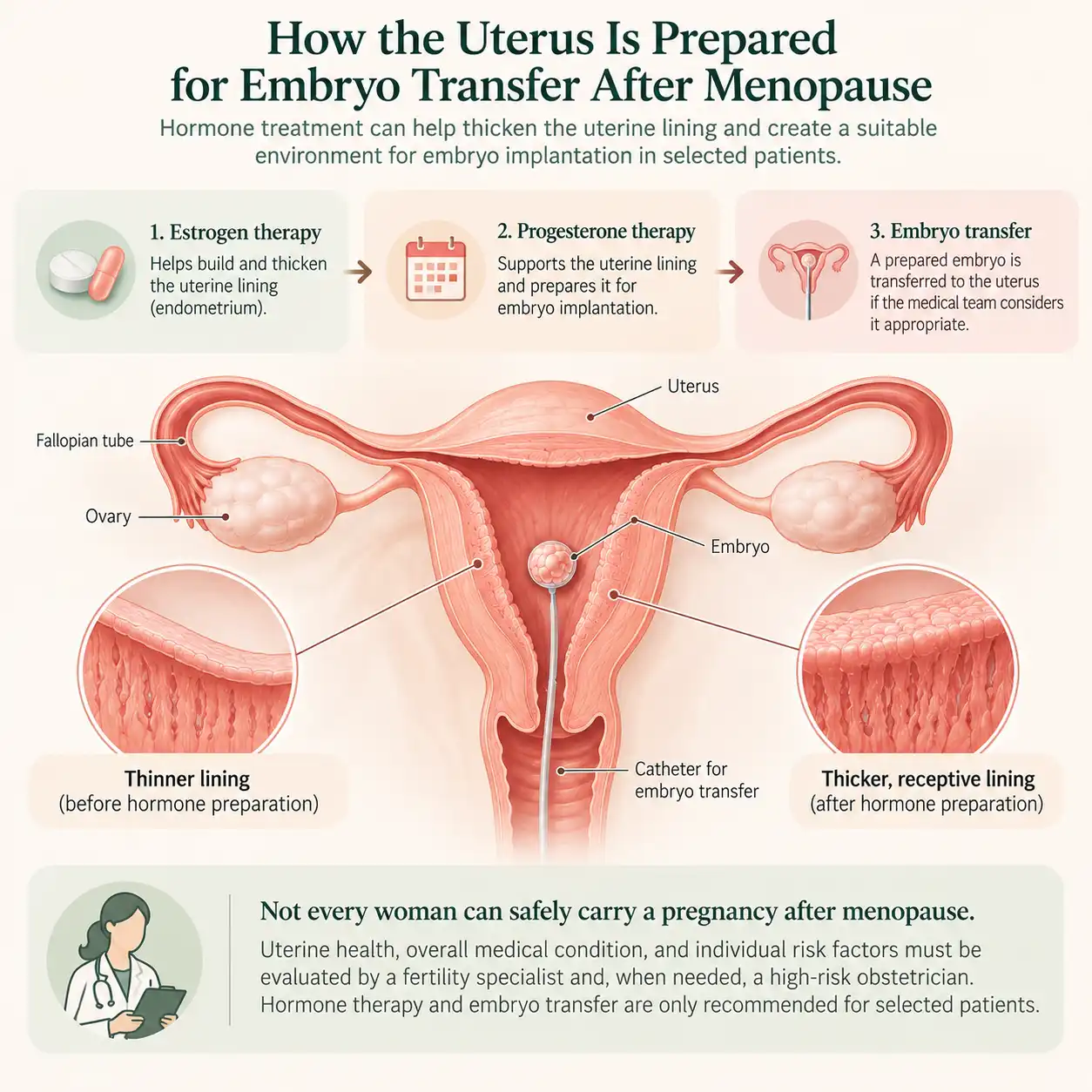
The practical point is that donor egg quality is not the only factor affecting success. The recipient’s age, uterine condition, general health, and pregnancy risks also matter.
Ask your clinic to explain its own success rates, how those rates are calculated, and how your medical history affects your treatment plan.