

Can You Get Pregnant During Menopause?

Can You Get Pregnant During Menopause
Author mehdisabet
Reading time 12 min
Published at 19 April 2025

Menopause marks a significant transition in a woman’s reproductive life, typically occurring between the ages of 45 and 55, with an average onset around 51. It is defined as the permanent cessation of menstruation for 12 consecutive months due to the decline in ovarian function and hormone production, particularly estrogen and progesterone. However, the possibility of Pregnant During Menopause, as well as during premenopause or perimenopause, is a common concern, as is distinguishing between menopause and pregnancy symptoms. This article explores these topics comprehensively, addressing fertility, premature menopause, assisted reproductive technologies, and practical tools for tracking symptoms.

What is Menopause, Perimenopause, and Premature Menopause?

Menopause is the point when a woman no longer has menstrual periods, signaling the end of natural ovulation and fertility. Women are born with approximately 1–2 million immature eggs, which decrease over time to about 26,000 by age 37. By menopause, the ovarian reserve is nearly depleted, and the ovaries stop releasing eggs. 

Perimenopause, the transitional phase leading up to menopause, can last 4–10 years and is characterized by irregular periods, fluctuating hormone levels, and symptoms such as hot flashes, night sweats, mood changes, vaginal dryness, and urinary issues. During perimenopause, ovulation becomes unpredictable but can still occur, making pregnancy possible.

Premature menopause, also known as primary ovarian insufficiency, occurs before age 40, affecting about 1% of women. It can be caused by genetic factors (e.g., Turner syndrome), autoimmune disorders, chemotherapy, radiation, pelvic surgeries, hypothyroidism, smoking, or polycystic ovary syndrome (PCOS). Symptoms mirror natural menopause but may be more intense due to the rapid hormonal decline.

Can You Get Pregnant During Menopause or Perimenopause?

Pregnancy During Perimenopause

During perimenopause, women can still ovulate, even if periods are irregular or absent for months. This means pregnancy is possible, though the likelihood decreases with age due to reduced egg quality and quantity. For example, women in their late 30s or early 40s who are premenopausal or perimenopausal may conceive naturally, but fertility declines significantly after age 35. Ovulation disorders during perimenopause can reduce natural conception chances, but assisted reproductive methods like in vitro fertilization (IVF) or intracytoplasmic sperm injection (ICSI) can improve outcomes by stimulating ovulation and transferring high-quality embryos. Experimental approaches, such as stem cell therapy or menstrual blood stem cell injections, are being researched to enhance egg quality, but these are not yet widely available or proven effective.

Pregnancy During Menopause

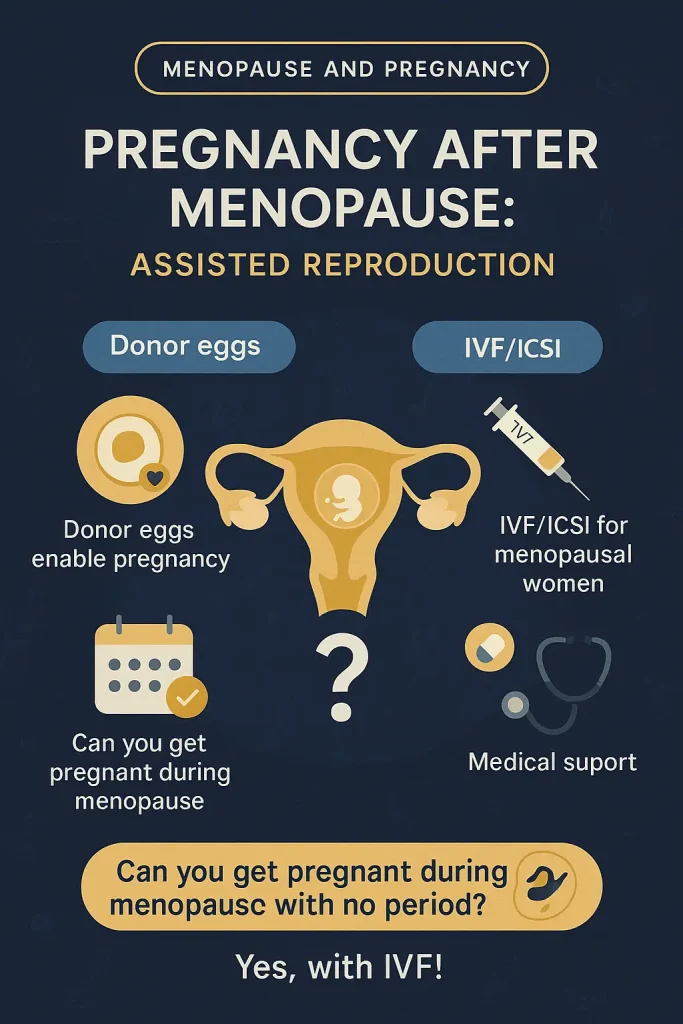
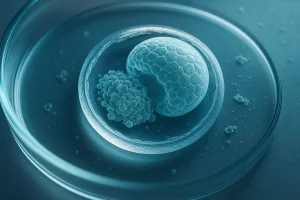
Once menopause is confirmed (12 months without a period), natural pregnancy is not possible because ovulation ceases entirely. The ovaries no longer release eggs, and the hormonal environment cannot support conception. However, women with a healthy uterus can achieve pregnancy through IVF with donor eggs or, in rare cases, frozen eggs retrieved earlier in life. In this process, donor eggs from younger women are fertilized with sperm (often from the recipient’s partner) and implanted in the uterus, which is prepared with hormone therapy. ICSI, where a single sperm is injected directly into an egg, may be used to increase fertilization success. Pregnancy after menopause carries higher risks, including gestational diabetes, hypertension, and preterm birth, due to advanced maternal age.

Pregnancy with No Period During Menopause

If a woman has not had a period for several months but has not yet reached the 12-month mark to confirm menopause, she may be in perimenopause. During this time, ovulation can occur unexpectedly, meaning pregnancy is possible even without regular periods. Women who assume they are menopausal due to absent periods should use contraception if they wish to avoid pregnancy and consider repeating pregnancy tests a few days after a missed period for accuracy.

Menopause vs. Pregnancy: How to Tell the Difference

Menopause and pregnancy share overlapping symptoms, especially during perimenopause, making differentiation challenging. Common shared symptoms include:

  • Missed or irregular periods: Perimenopause causes erratic cycles, while pregnancy halts periods.
  • Hot flashes and night sweats: Early pregnancy can trigger hot flashes, similar to menopause.
  • Mood swings and fatigue: Hormonal fluctuations in both conditions affect mood and energy. Up to 40% of perimenopausal women report sleep disturbances, contributing to fatigue.
  • Breast tenderness: Common in early pregnancy and perimenopause due to hormonal changes.
  • Frequent urination: Pregnancy increases urine production due to higher blood supply and kidney activity, while perimenopause may cause urinary symptoms (e.g., urgency or infections) due to declining estrogen levels.

Pregnancy-Specific Symptoms

  • Nausea and morning sickness: Typically starts around weeks 5–6 of pregnancy and is not associated with perimenopause.
  • Food cravings or aversions: Hormonal changes in pregnancy heighten sensitivity to smells and tastes, unlike perimenopause.
  • Swollen breasts: Pregnancy may cause noticeable breast enlargement, beyond tenderness.
  • Positive pregnancy test: The most definitive indicator of pregnancy.

Menopause-Specific Symptoms

  • Vaginal dryness and low libido: Common in perimenopause due to estrogen decline.
  • Brain fog and joint stiffness: More typical of perimenopause than pregnancy.
  • Persistent hot flashes: Ongoing in perimenopause, unlike transient pregnancy-related heat.

Diagnostic Tools

  • Pregnancy tests: A home test can confirm pregnancy, ideally taken on the first day of a missed period and repeated a few days later for accuracy.
  • Hormone tests: Blood tests measuring follicle-stimulating hormone (FSH) and luteinizing hormone (LH) can indicate menopause (elevated FSH suggests ovarian decline).
  • Cycle-tracking apps: Apps like Flo allow women to log irregular periods, hot flashes, brain fog, and urinary symptoms, aiding in perimenopause tracking. Premium features provide monthly reports for doctor consultations.
  • Medical consultation: If symptoms are ambiguous or pregnancy is ruled out, a doctor can assess for perimenopause or other conditions via blood tests or ultrasounds.

Women over 35 trying to conceive for 6 months, or those over 40, should consult a doctor promptly if conception is delayed, as fertility declines rapidly with age.

Premature Menopause and Fertility Challenges

Premature menopause significantly reduces fertility, as ovulation becomes rare or stops. However, 5–10% of women with premature menopause may ovulate sporadically and conceive naturally. Hormone replacement therapy (HRT) can alleviate symptoms and, in some cases, support ovulation, but its impact on fertility is limited in advanced cases. IVF with donor eggs or ICSI is often the most effective option for women with premature menopause.

Causes of Premature Menopause

  • Genetic factors: Chromosomal abnormalities like Turner syndrome.
  • Autoimmune disorders: Thyroiditis or lupus attacking ovarian tissue.
  • Medical treatments: Chemotherapy, radiation, or pelvic surgeries.
  • Lifestyle factors: Smoking, excessive alcohol, or poor nutrition.
  • PCOS: May accelerate ovarian aging in some cases.
  • Infections or medications: Certain diseases or drugs can impair ovarian function.

Treatment for Premature Menopause

  • HRT: Replaces estrogen and progesterone to manage symptoms and protect against bone loss.
  • Fertility treatments: Ovulation induction or IVF with donor eggs.
  • Lifestyle changes: A balanced diet, exercise, and quitting smoking support overall health.

Does IVF Cause Early Menopause?

There is no conclusive evidence that IVF causes early menopause. IVF stimulates the ovaries to produce multiple eggs, but these are eggs that would naturally be lost in a menstrual cycle, so the procedure does not significantly deplete the ovarian reserve. However, women undergoing IVF may have underlying conditions (e.g., PCOS or low ovarian reserve) that predispose them to earlier menopause. Repeated IVF cycles can cause temporary hormonal imbalances mimicking menopausal symptoms, but these typically resolve post-treatment.

Can Menopause Be Reversed to Restore Fertility?

There is no scientifically validated method to reverse menopause and restore natural fertility. Experimental approaches like platelet-rich plasma (PRP) therapy, stem cell therapy, or menstrual blood stem cell injections aim to rejuvenate ovarian function but are not widely available or proven. For menopausal women, IVF with donor eggs remains the standard for achieving pregnancy. For perimenopausal or premature menopause cases, early fertility treatments may preserve some reproductive potential.

Pregnancy After 45: Risks and Considerations

Pregnancy after 45, whether natural or via IVF, is high-risk due to:

  • Maternal complications: Increased rates of preeclampsia, gestational diabetes, and cesarean delivery.
  • Fetal risks: Higher likelihood of chromosomal abnormalities (e.g., Down syndrome), miscarriage, and preterm birth.
  • Physical demands: Older age may complicate pregnancy and recovery.

Women should undergo thorough medical evaluations and consult fertility specialists to assess risks and explore options like donor eggs or preimplantation genetic testing.

Post-Menopausal Health Risks

After menopause, decreased estrogen levels increase the risk of:

  • Osteoporosis: Reduced bone density, increasing fracture risk.
  • Heart disease: Higher susceptibility due to changes in cholesterol and blood pressure.
  • Obesity: Slower metabolism can lead to weight gain.

HRT, calcium supplements, weight-bearing exercise, and a heart-healthy diet can mitigate these risks. Regular medical checkups are essential for early detection and management.

Menopause in Your 20s: A Rare Phenomenon

Menopause in one’s 20s is extremely rare and usually linked to premature menopause caused by genetic conditions, autoimmune disorders, or medical interventions. Women experiencing symptoms in their 20s should seek immediate medical evaluation to identify causes and explore fertility preservation options, such as egg freezing.

Can you get pregnant during menopause with no period

Key Takeaways

  • Perimenopause: Pregnancy is possible due to sporadic ovulation, even with irregular periods. IVF or ICSI can enhance chances.
  • Menopause: Natural pregnancy is not possible, but IVF with donor eggs or ICSI enables pregnancy.
  • Premature menopause: Reduces fertility; HRT or IVF with donor eggs may help.
  • Menopause vs. pregnancy: Overlapping symptoms (e.g., missed periods, fatigue) require pregnancy tests and hormone assessments. Cycle-tracking apps aid monitoring.
  • IVF and menopause: IVF does not cause early menopause but may highlight ovarian issues.
  • High-risk pregnancies: Pregnancy after 45 increases maternal and fetal risks.
  • Post-menopausal health: Osteoporosis, heart disease, and obesity risks rise; lifestyle changes and medications help.
  • Reversing menopause: Not possible, though experimental therapies are under study.

For women navigating menopause or considering pregnancy, consulting a healthcare provider or fertility specialist is crucial. Tools like cycle-tracking apps and timely medical evaluations can provide clarity and support informed decisions.

contact icon Get in touch with us for advice Contact us
dots
Related articles Read more
Comments

Leave a Reply

Your email address will not be published. Required fields are marked *